Showing posts with label book-into-play. Show all posts

Sunday, 5 May 2019

Spring reading,


05/05  I'd been wanting to read Red Dust Road ahead of its NTS tour later this year. And what a joy it was: a voyage of discovery; of parentage & self & identity.
Kicking the story off with the drama of re-meeting her birth father; tracing that moment back in the quest to re-discover her roots and whom, what kind of people, her birth parents are; the plot weaving in & out of childhood memories, 
*  Incidents of race and difference from growing up & becoming; the love and regard for her adoptive ('true') parents & the aunts from Nairn;  the disappointments of ideals held when reality hits, of opportunities just missed; the camaraderie & care of her friends & new friendships forged helping her find a way across Nigeria; that joyful rendezvous with Sidney, her brother, opening up a new world of possibility and re-connection to her wider Nigerian family. 
*  Reflections on memory (that well-known, well-used family refrain of "remember that time when...?" to relive a moment from childhood); of her parents' relationship - "my parents reinforce each other with memory" as well as their fragility & mortality. 
*  Hitting the nail square on the head with regards to Aberdeen - "depressingly dull or majestic & magical" ... "either the colour of sparkling silver or the drab colour of porridge or fog, depending on your way of seeing it." (132).

Favourite extracts: 
Part of me came from Africa, part of me was foreign to myself, strange to myself since I have never been to the dark continent and could only really have it burning away, hot and dusty, in my mind. It is not so much that being black in a white country means that people don’t except you as, say Scottish; it is that being black in a white country makes you a stranger to yourself. It is not the foreigner without; it is the foreigner within that is interesting. Every time somebody in your own country asks you where you are from; every time you indignantly reply, ‘I’m from here,’ you are subconsciously caught up in asking that question again and again of yourself, particularly when you are a child. (38)
I pictured of the plots of my land in the African landscape of my imagination. It was flat land, not like the Highlands of Scotland. The earth was dark and rich. There was a red dust road. I couldn’t really get much further than that. (42)
... And no matter how much she loved me, no matter how much my dad loved me, there is still a windy place right at the core of my heart. The windy place is like Wuthering Heights, out on open the moors, rugged and wild and free and lonely. The wind rages and batters at the trees. I struggle against the windy place. I sometimes even forget it. But there it is. I am partly defeated by it. You think adoption is a story which has an end. At the point about it is that it has no end. It keeps changing its ending. It infuriates me that this windy place exists at all. It shouldn’t.  ...  I am lucky. I am blessed. And yet still, sometimes, in my dark hours, there is this feeling that I am alone. And I can’t shake it. There’s this ghostly something. I’m only alone in the way that everybody is alone. And yet it seems that the bundle of a child that is wrapped up in the ghostly shawl of adoption does have another layer of aloneness wrapped up in there. (45-46)
Why do we even want to know; surely we know ourselves by now? Why should we have any curiosity, never mind the blazing burning curiosity, the all-consuming insatiable appetite for self-knowledge that some of us feel? If we think of ourselves as puzzles, and our birth parents are part of that puzzle, do we think that finding our parents will answer the puzzle? Surely we are not so naive? The jigsaw can never, ever be completed there will always be missing pieces, or the pieces will be too large and clumsy to fit into the delicate puzzle … You are made already, though you don’t properly know it, you are made up from a mixture of myth and gene. You are part fable, part porridge. (47)
I take off my shoes so the red earth can touch my bare soles. It’s as if my footprints were already on the road before I even got there. I walk into them, my waiting footprints. The earth is so copper warm and beautiful and the green of the long elephant grasses so lushly green they make me want to weep. I feel such a strong sense of affinity with the colours and the landscape, a strong sense of recognition. There is a feeling of liberation, and exhilaration, that at last, at last, last I’m here.... The road welcomes me; it is benevolent, warm, friendly, accepting and for now it feels enough, the red, red of it, the vivid green against it, the long and winding red-dust road. (213-214)
The empty ghost, the wraithlike figure that has stalked me for years seems to be taking off her pale polka-dot dress, slowly, in the sports stadium changing rooms, and hanging it onto a peg. She opens a locker, with her own key, found after years of fumbling, and disappears into its depths. (276)

Kay, Jackie. Red Dust Road.
Picador: London, 2010.

. . . . . 

28/04  I cannot remember how I first heard of Fishbowl. It may have been a mention in the Guardian Books pages perhaps when it first came out in 2015. Either way, its premise caught my attention & amused me so I jotted its name down as a future read. Looking for a remedy book, something to ease me back into reading after MN&JS had taken its toll, I found Fishbowl was in stock at the library. Perfect! 

Chapter Two: "Ian doesn't take his plunge from the balcony until chapter 54" raised a smile. - Okay, Bradley Somer, we're with you; you master of intrigue, you. 

What a read. Witty, philosophical, heart-warming.

It takes a goldfish less than four seconds to fall the distance between the twenty-seventh floor and the sidewalk below. A flash. The time it takes to read a sentence or two. For Ian, it's a lifetime of wonder. 

 ...  I loved how the novel was both four seconds long and yet simultaneously months, years old. The clever weaving-in & out of characters and story-line; pausing each one to return to Ian's apparently imminent demise: the high drama of Connor/Katie/Faye especially  and the background to, and resolution of, Claire's story. 
Lives intersecting, crisscrossing rooms, corridors and streets close by the apartment; "a glimpse into the box" ... Ian's fall serving as a "vital thread that ties humanity together."  
That twist in the tale come the ending. 

Brilliant.
. . . . . 
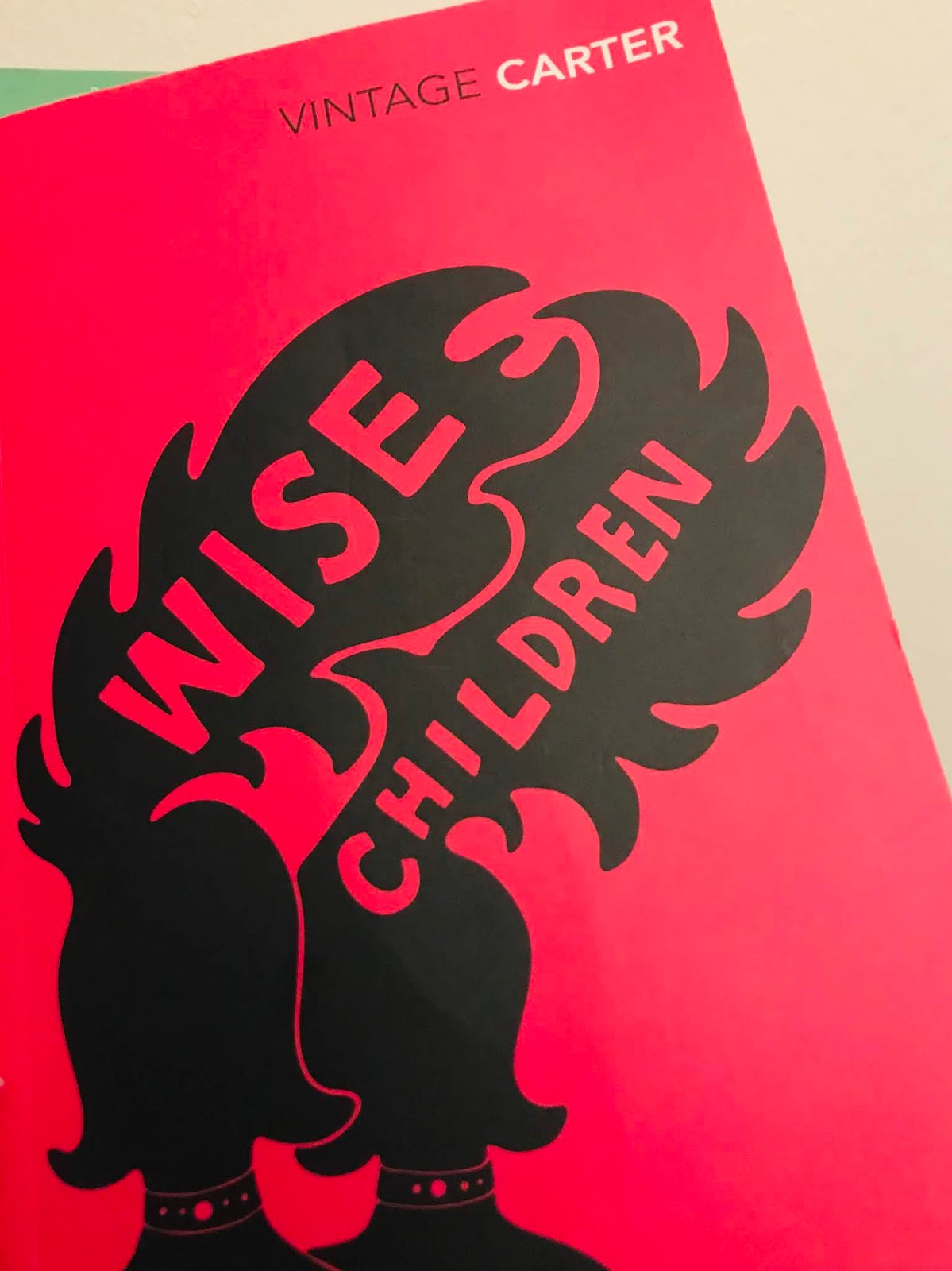
a brilliant bonkers journey of binaries

Emma Rice's debut play came to town. A chapter a night ahead of watching the performance. Characters I loved, was rooting for, cheering on from the sidelines. 
Great humour, warmth & escapades and a love letter to Shakespeare of sorts. 
Glad to know of the nuances which time on stage could not allow for (the chapter on America omitted entirely); the cleverness in tying up the ending. (Ah Perry!)
. . . . . 


25/02  I wanted to like this book. After all, a big chunky read; a epic of sorts. A book that had already been dramatised for tv. A book that promised a collision of worlds, of magic and society,  with an ironic Austen-esque eye cast over its proceedings. 
At times, the plot development caught me up & kept me page-turning; at times, the pace felt to lag & I stalled somewhat but still, would persevere & keep going. 
Then two things occurred: 
- I found myself so irritated by the character of the man with the thistle-down hair that (with a cheating glance to a plot outline), I discovered he wasn't due to die for at least another hundred pages. Ugh, time for a break.
- I swapped over to Wise Children & found it an absolute riot. When I'd finished that brilliant bonkers journey of binaries, MN&JS was still sat waiting on my nightstand. I found myself putting off picking it up again. A couple of weeks passed and so, as much I dislike not finishing a read, that book was putting me off reading altogether. High time to quit & find another, more engaging read. A world I wanted to enter & enjoy.  
.... I wanted to agree & join the crowd of admirers, Gaiman at the front leading the fanfare but. Life's too short to read 'bad' books. Not one for me. Off to the charity shop it went to become someone else's cup of tea instead.

Saturday, 17 June 2017

Update: June 2017 / III


Crimson Petal...    ★★★★★

I loved this book. I loved it in the way Time Traveler's Wife got me in 2005. I didn't want it to end even though I full well knew the ending from the tv series. 

But to rewind a little: first there was 2011 & then again onto 2014, where I spotted this copy & seized upon it in the brilliant Oxfam bookshop on Market Street, Nottingham whilst looking for some Long Read literature. 
Having added it to my 'shelf, I started it over Christmas 2016 & soon fell in step with the introductions to different characters as Faber passes you from one character to Caroline to Sugar and so on. 
- As ever, it's good to see the characters fully fleshed out from their tv dimensions; to know their back stories, to understand their foibles better. 
- Fascinating to trace Sugar's transformation from well-read prostitute, mainly out for herself & own interests to the nurturing love she holds for Sophie.
- The meta aspect too: revisiting Agnes through the old diaries.
- The friendship/unspoken love between Henry & Emmeline. 
- The novel's structure in itself which made it perfect for bedtime reading. 
No racing ahead to conquer a chapter before you drop off; short enough to stay with that character, their happenings & then stop at a good point, at your own pace & remember where you left off at the next night. 

I didn't want it to end. I knew whatever was due to follow wouldn't be as strong or powerful a read.
............

Wonder... read December 2016; generously lent by my friend, SB. 
I hadn't been expecting Palacio's variety of narrative voices given how the first chapter started out. I liked it all the more for that. Good to experience Auggie's life from different perspectives & the effect of his life on them. 
I wasn't sure how it would be tied up at the end; how could there be an end to something to mark him out as different throughout his whole life? 

Conan Doyle, 
revisited over January & into February. As Gatiss & Moffat led us through The Six Thatchers into The Final Problem, I happened across the Baker Street Babes - helpfully tweeting which threads linked back to which ACD stories. I devoured a fair few in appreciating the old against the new whilst maintaining the faintest hope of outsolving the mysteries of the detective ahead of The Final Problem. Unlikely but still. 

New York Trilogy, 
this text was due to cross over into my work life as a stage play. It'd been sitting on my Goodreads list for six years, having been recommended to me one summer at a party. One of those where you find yourself inevitably in conversation with other book nerds & start recommending your favourites.

- Of City of Glass - I was not a fan. Clever, certainly - possibly too clever for itself at times though. I would be reading the novel whilst thinking of how it was an exam board delight to pose post-modernist questions out of the text or what the essay title on that particular section might be. I finished the story & threw it to the floor. Deeply unsatisfying. 
- The Locked Room proved better as an exploration of relationships; of tensions in dating, of secrecy in married life, the obsessive nature of quests. 

- Ghosts was clever & funny. The colours for characters. The watching-him-watching-you drama to pull the reader in. Yup, Ghosts was probably my favourite of three.

All this created an exquisite tension. As the evening progressed, the most casual remarks became tinged with erotic overtones. Words were no longer simply words but a curious code of silences, a way of speaking that continually moved around the thing that was being said. As long as we avoided the real subject, the spell would not be broken. We both slipped naturally into this kind of banter, and it became all the more powerful because neither one o of us abandoned the charade. We knew what we were doing, but at the same time we pretended not to. Thus my courtship of Sophie began - slowly, decorously, building by the smallest of incitements. 
                                                                                                 The Locked Room: Paul Auster


I skipped through The Bridges of Madison County too. 
We'd had stacks upon stacks of books on set for a play & I was tasked (with much self-restraint!) to box them on closing. This one caught my eye; can't remember why. Perhaps the mention of intense passion; of chance encounters which alter your life forever. 
It served as my lunchtime read over a few weeks. I enjoyed it relatively well enough until the love-making scene. After those superfluous metaphors, I lost much respect for it but continued for closure. By the end with the children's response to their mother's letter. - Ugh; complete lack of realism.

The Library of Shadows
April - June 2016; another lunch-hour read.
Taken from another bookish struck set, post-run. 
Judging by Goodreads, I was not the first to scan the blurb, note mention of a bookshop & hope for something of Zafon's calibre. Nor was I the first to be disappointed that it did not manage to deliver.

A mixed bag. Perhaps I'm outwith its targeted demographic as it seemed somewhat YA.
I found it:

- shallow in some places (Katherina's damsel qualities; Pau's transparent villainy)
- sluggish in others (possibly due to the strictures of translation into English?) 

and weakly & unsatisfactorily resolved.
However, there were still flashes of goodness, such as:
- the early stages of the thread where the friends turned detective;
- the supernatural premise underpinning the plot was fairly interesting.


Stancliffe's Hotel, 
a present from Christmas 2016.  ★★★
First of all, it's a joy to know that these, Penguin's Little Black Classics, have been published. 
I knew of the stories from Angria from visits to Brontë Parsonage & habitual mention in Brontë biographies but had not known I could actually read one.   
It's by no means of the mature standard one finds with Jane Eyre or Villette but why should it be, being an early work? Although very well-peopled for a fairly short read, it made me laugh on many occasion with its wit & sharp, satirical eye. Definitely worth a read. 

There was the great man in his usual attire of a gingham jacket & canvas trousers of more than Dutch capacity. Stock he disdained, & waistcoat: the most fastidious lady might have beheld with admiration that muscular chest & neck bristled with heroic hair.

- Haven't we all been there?

It took me a full half hour to dress, and another half hour to view myself over from head to foot in the splendid full-length mirror with which my chamber was furnished. Really, when I saw the neat figure therein reflected, genteelly attired [...]   I thought 'there are worse men in the world than Charles Townshend'.

Lastly, Persuasion: 
a fond re-visit of my favourite Austen novel prior to watching a stage play of the same next week.  It will be a very loose re-working in a modern setting but nonetheless, I wanted to refresh my memory as to the characters & nuances of the plot. Persuasion: so real with its memories of love lost, of awkward reunions & one's best intentions gone awry. 

Sunday, 9 January 2011

Childhood Storybook Memories...

I headed out with a group of friends last night to see The Secret Garden musical on its closing night at Festival Theatre, Edinburgh. Technically speaking, an imaginative & artistic set, well lit & well costumed (thanks to Wimbledon graduate, Francis O'Connor). The performances from the cast in terms of both singing & acting were also top-notch.

It surprised me how much I could recall from my reading of it as a girl as I gave a brief synopsis to my friends beforehand. I cannot remember for the life of me as to who published the book we owned. If I could, I would track it down again & buy it back in a snap as that one of ours was swept away by the tidying ravages of time. The book was beautifully illustrated & I can see the very captions acompanying the images, starting out with "Mary Lennox was a sickly sallow and sour-faced girl."

I think part of my reason for remembering the plot so vividly was my fascination was the precocious "yellow girl" left orphaned in a foreign land & shipped across the world to live on the moors of Yorkshire. That experience of vast stretches of purple grasses was well within my ken as I spent part of my childhood roaming about on the North York Moors. Add to that, the Gothic element (which this production captured so neatly) of waste & disrepair in both building & inhabitants; winding forbidden passages leading to two sour-faced precocious children coming face-to-face with each other; the intrigue of a hidden door into a different world. Ach, no wonder it took hold so well.

One aspect which Marsha Norman's musical adaptation does not entirely realise is the pivotal role of Ben Weatherstaff, the surly gardener who discovers the children amongst the partially neglected garden and the changes within his character. Initially Ben is angry at finding them there, having quietly continued to nurture the roses but he ends up conspiring in their secret, paving a way back to health & vigour. I remember the moment he introduces them to the Doxology, sung at first by Dickon:
Praise God, from Whom all blessings flow;
Praise Him, all creatures here below;
Praise Him above, ye Heavenly Host;
Praise Father, Son, and Holy Ghost. Amen.
I think I can recount the moment of the song because of how it initally appears incongruous with the outdoor experience & its curious huddle of people; the garden presenting no established setting of a Sunday. Yet that moment is actually a key one in my mind in terms of creation & new life: the very themes which the novel so readily explores & engages with to bring those broken aspects back to new life through the resolution of the ending.
life has its ‘wuthering’, the painful struggle to get through, but being alive – being ‘wick’ – means that along with the pain you can experience joy, growth and connection.

Having remembered so vividly, I am now compelled to go back & re-read. Thankfully TSG had already foreseen & embraced that desire of their audience within their marketing strategy of re-printed Penguin classic alongside the programme :)